- Mobile
Lab
- Lab
in Lecture, Lecture in Lab, Anytime & Anywhere
-
- Dr.
Charles Kim
-
WHAT
IS MOBILE STUDIO LAB
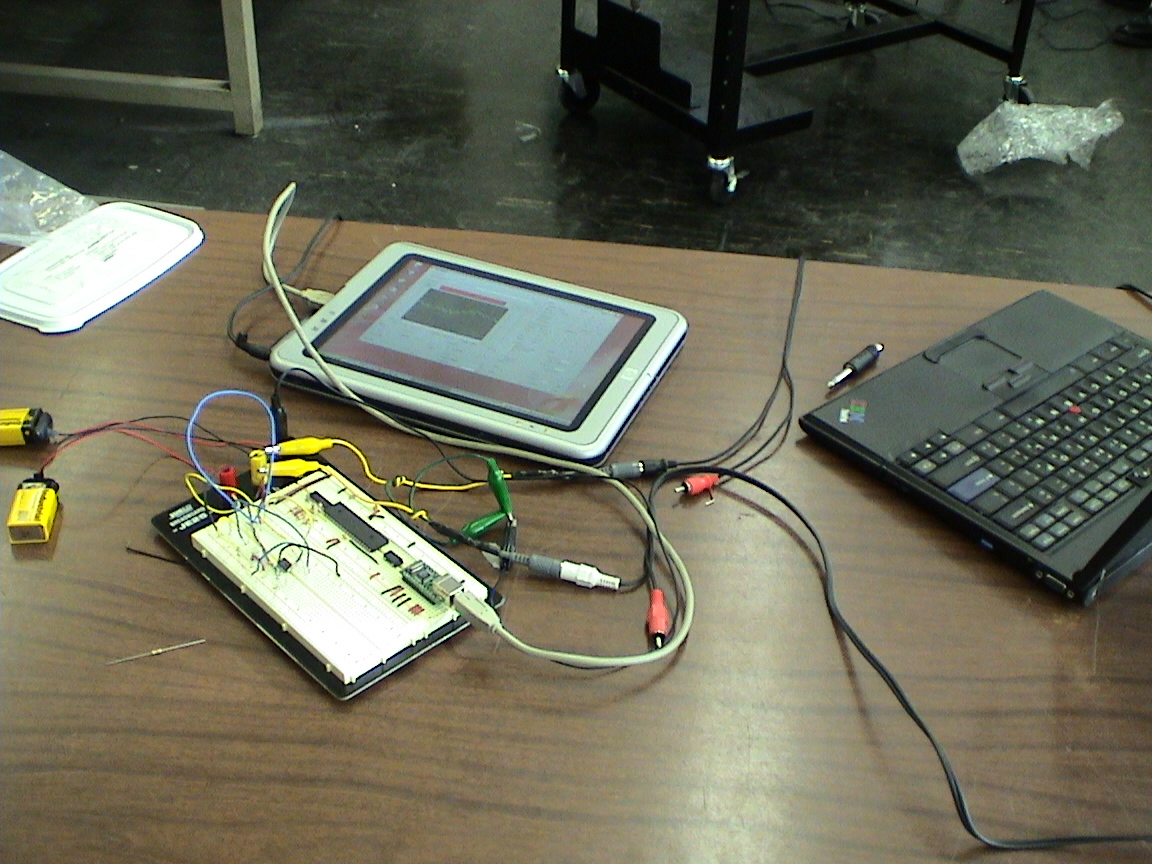
Mobile studio class means, instead of heavy
equipment and other measurement device stationed in a laboratory
room, that we put those functions of instrumentation into a
computer. In other words, a software inside your PC replaces
oscilloscope, function generator and other equipment. Instead of
bulky power supply, we use regular, handy 9V batteries. The only
additional thing, which is an essential part though, is an
interface board between your circuit in the breadboard and the
computer's USB port.
With your breadboard and your laptop (or Tablet PC),
now you are ready to conduct any lab work at any place: your
dorm, library, or restaurant. with your laptop (or tablet pc), If
you do not have your own laptop, don't worry. We can install the
instrumentation software in any PC we have in the building. Just
bring the interface board and your breadboard to any PC in the
building. So it's more like a 24/7 lab, isn't it.
Then there should not be a separate lab course as we
have now. Instead, we can merge lab and lecture together. Instead
of reporting to a laboratory room at least once a week, and of
coming again (hopefuilly the room is still open and parts are
available) to finish your unfinished job, you can conduct your
lab at your own schedule, of course, within a week or so.
MOBILE STUDIO
for Network Analysis II (Fall 2004)
- Captured,
Low-Resolution Pictures: 3, 4, 5, 6, 7, 8, 9, 10
MOBILE STUDIO for Network
Analysis I (SPRING 2005)
- This mobile studio lab is an
examination of simple RC circuit and its frequency (or
sound tone) changing function
- Dr. Don Millard of RPI was again
invited for the session. From next semester, we hope to
have our own mobile studio lab, of course, helped and
encouraged by Dr. Millard.
- Here are movie files (mainly for Dr.
Millard's lecture) and photos of students working on the
subject.
Photos:
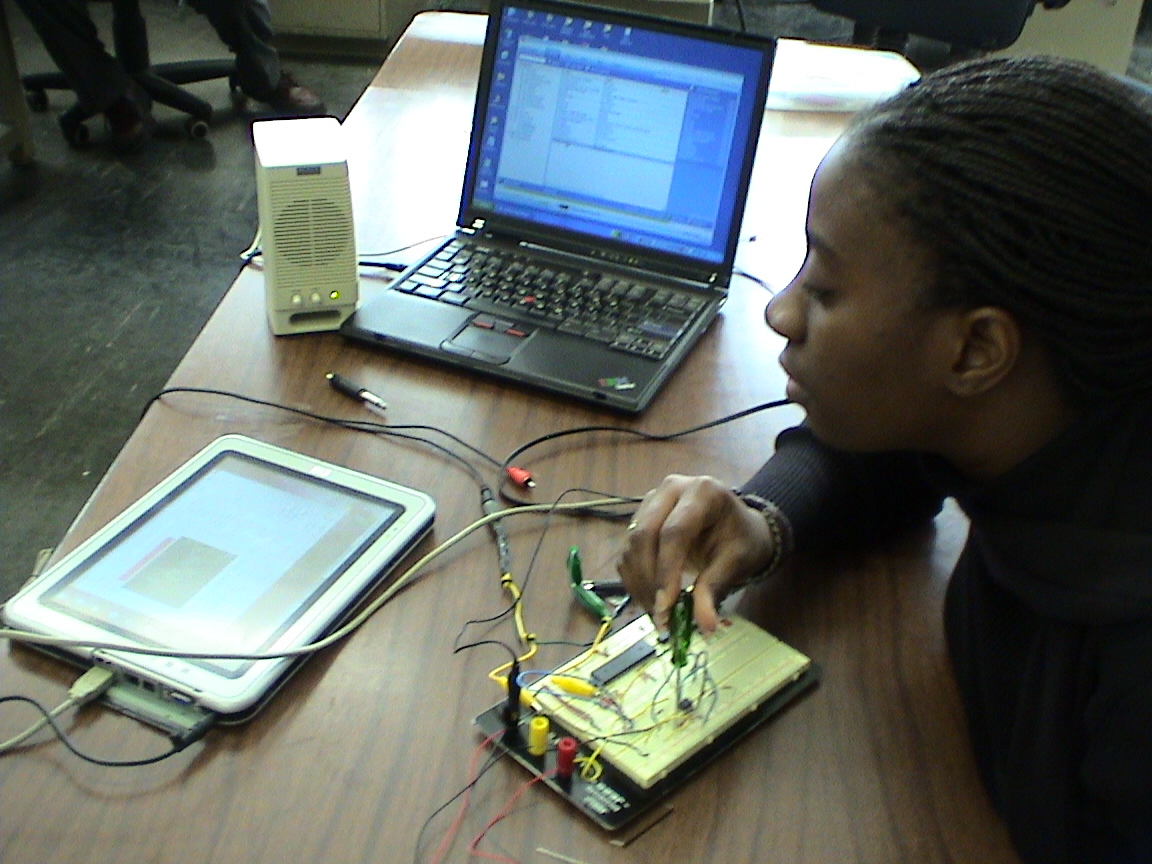
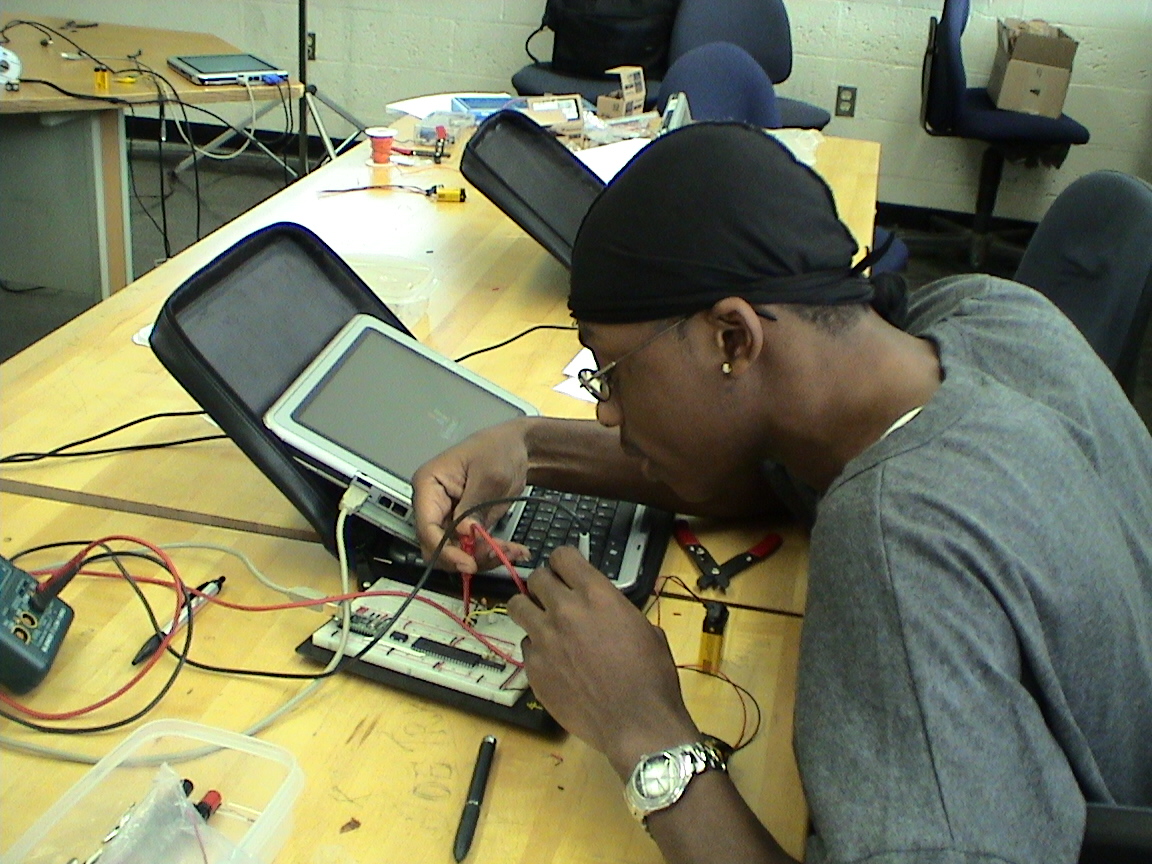
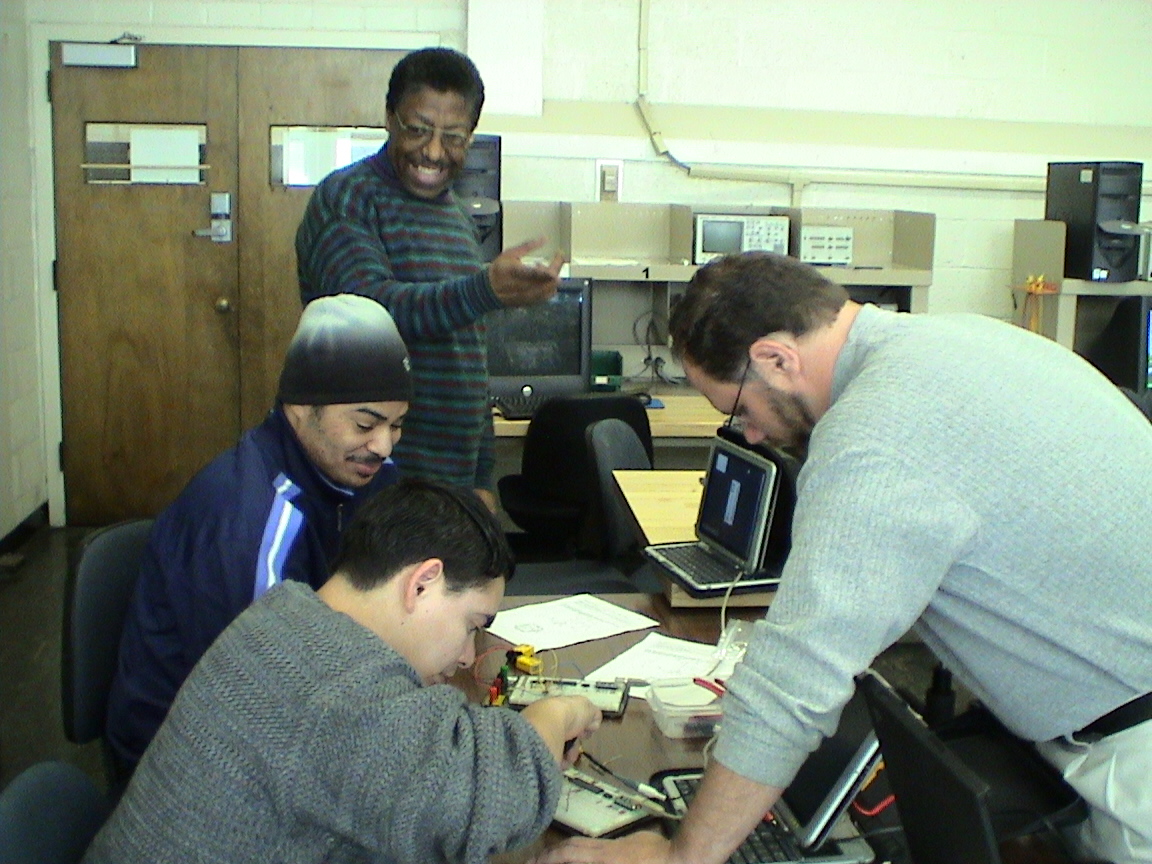
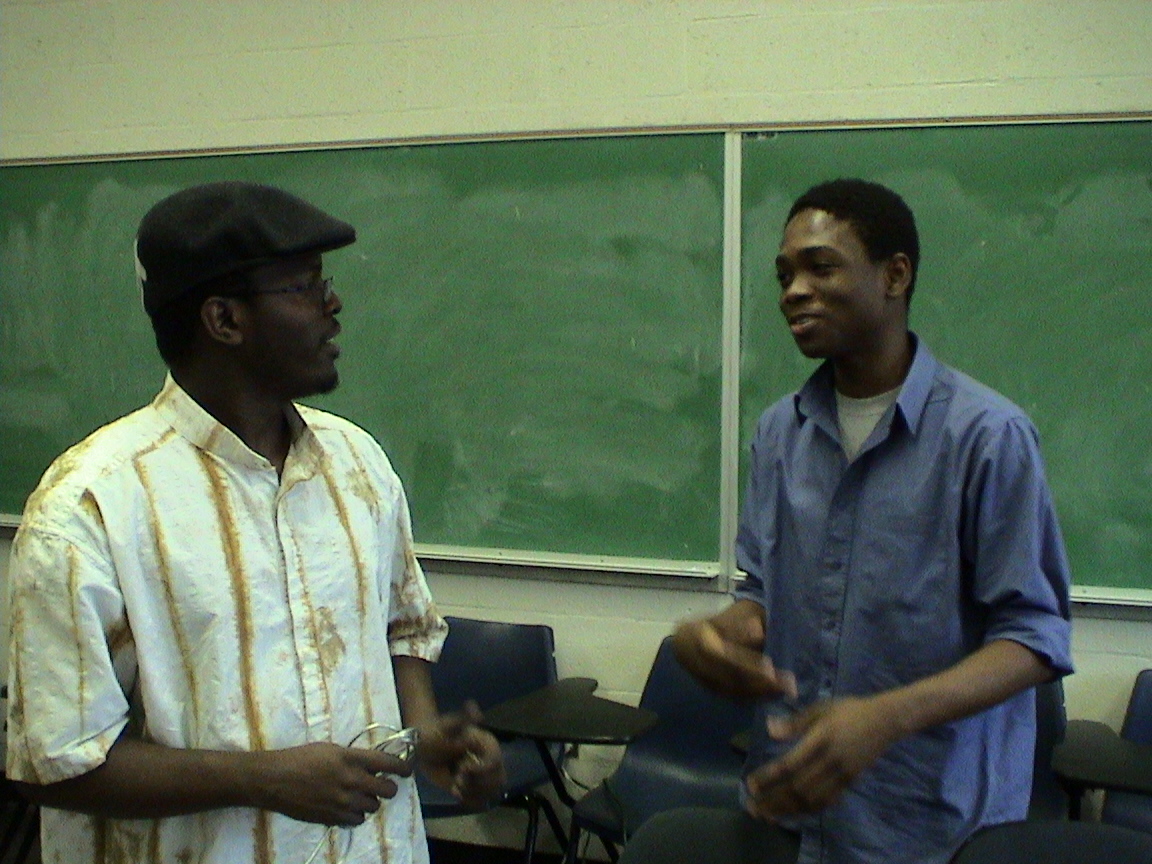
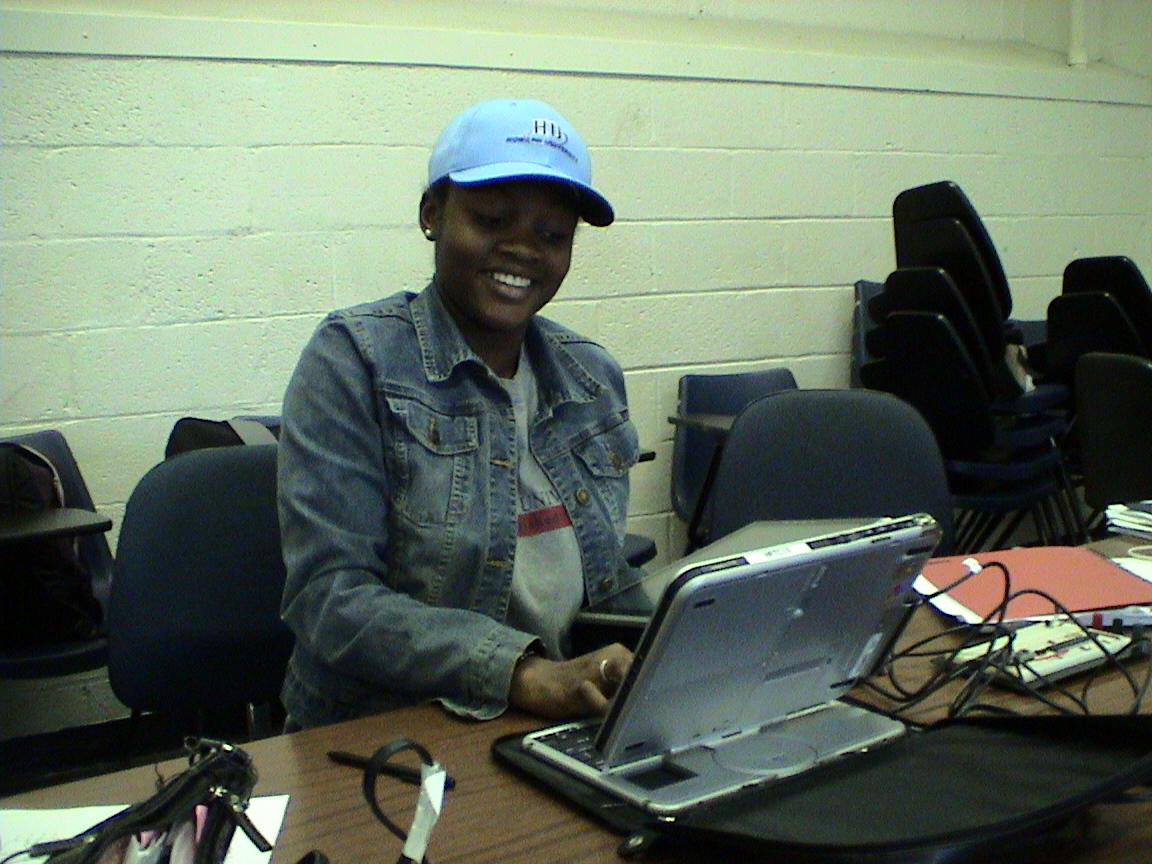
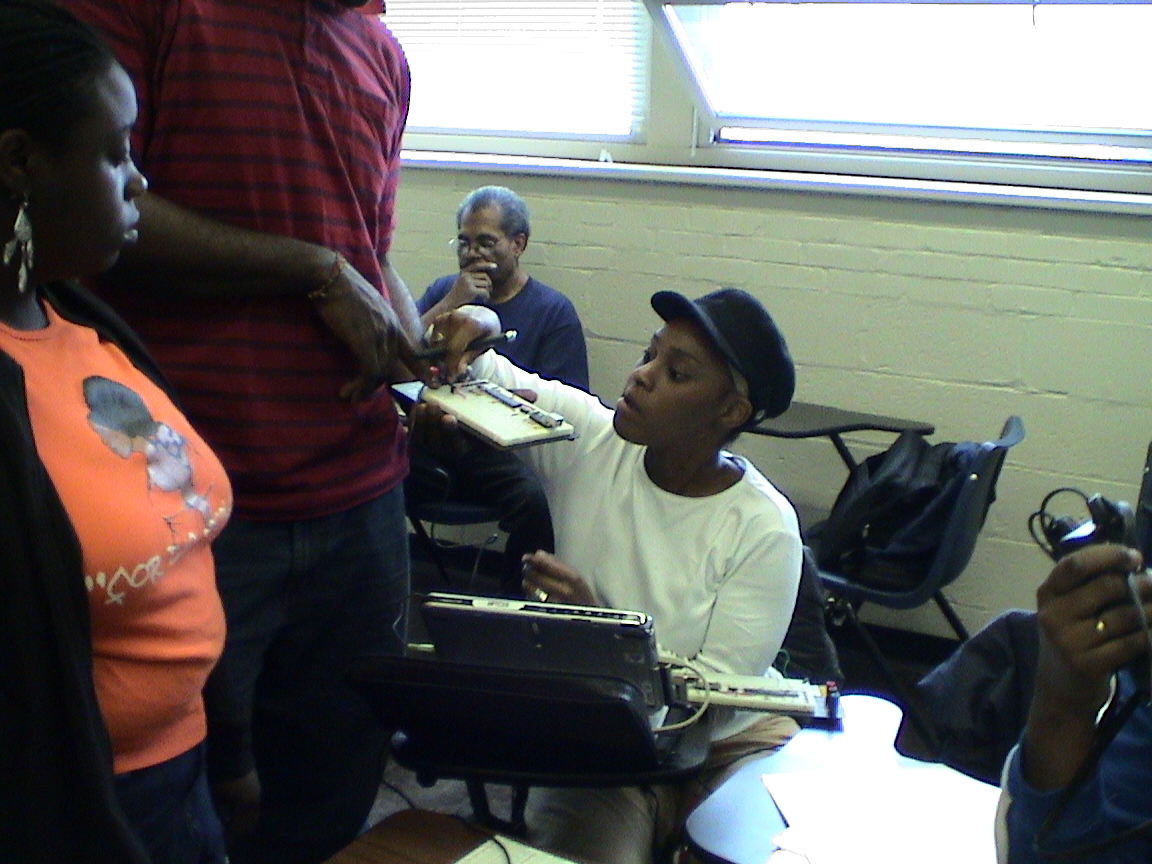
Keisha D'Anaurd in her test (Left). Dr.
Don Millard is helping Jan Jerry (Right).
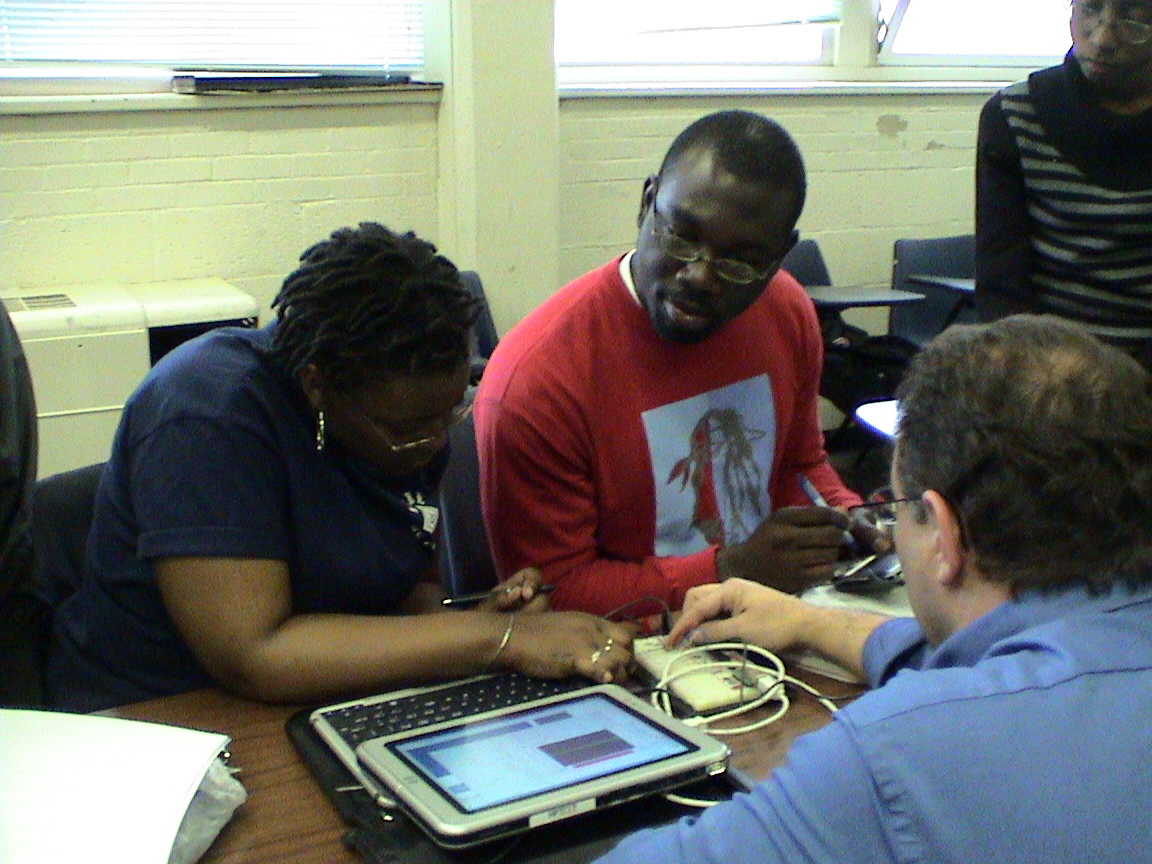
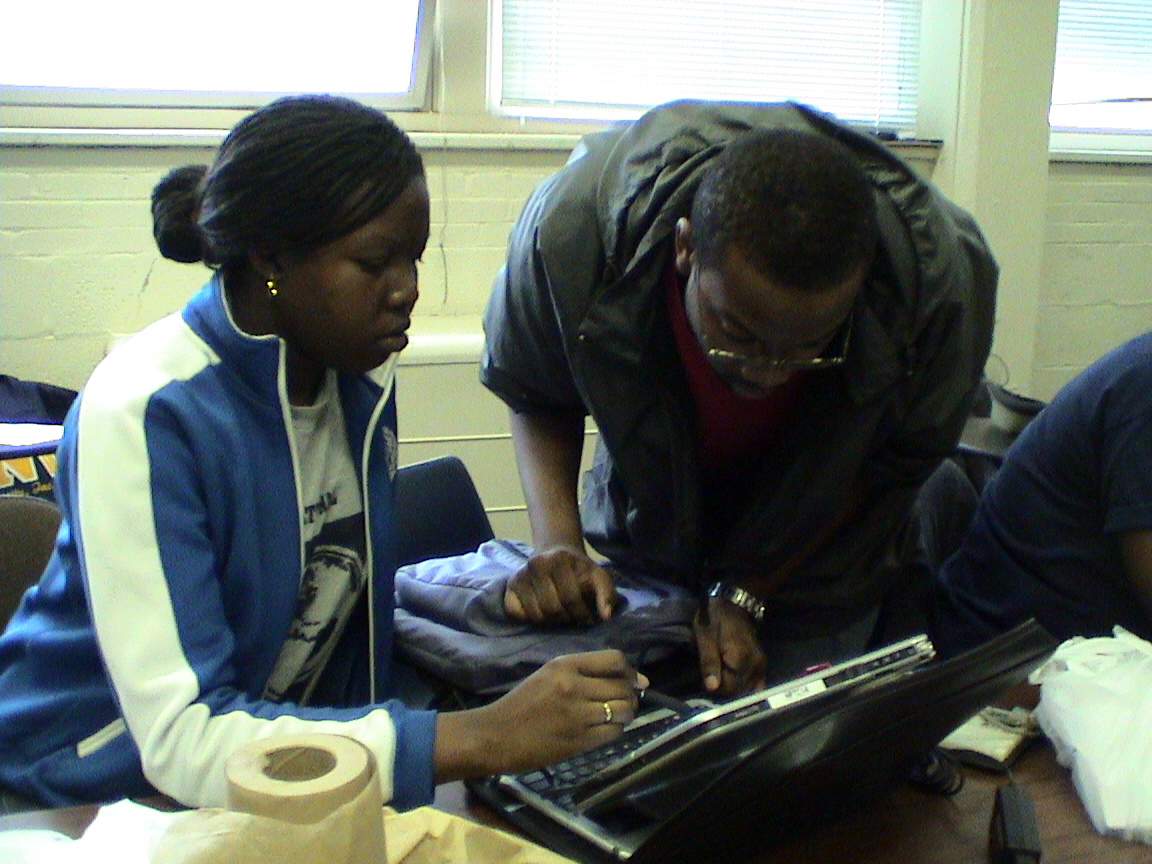
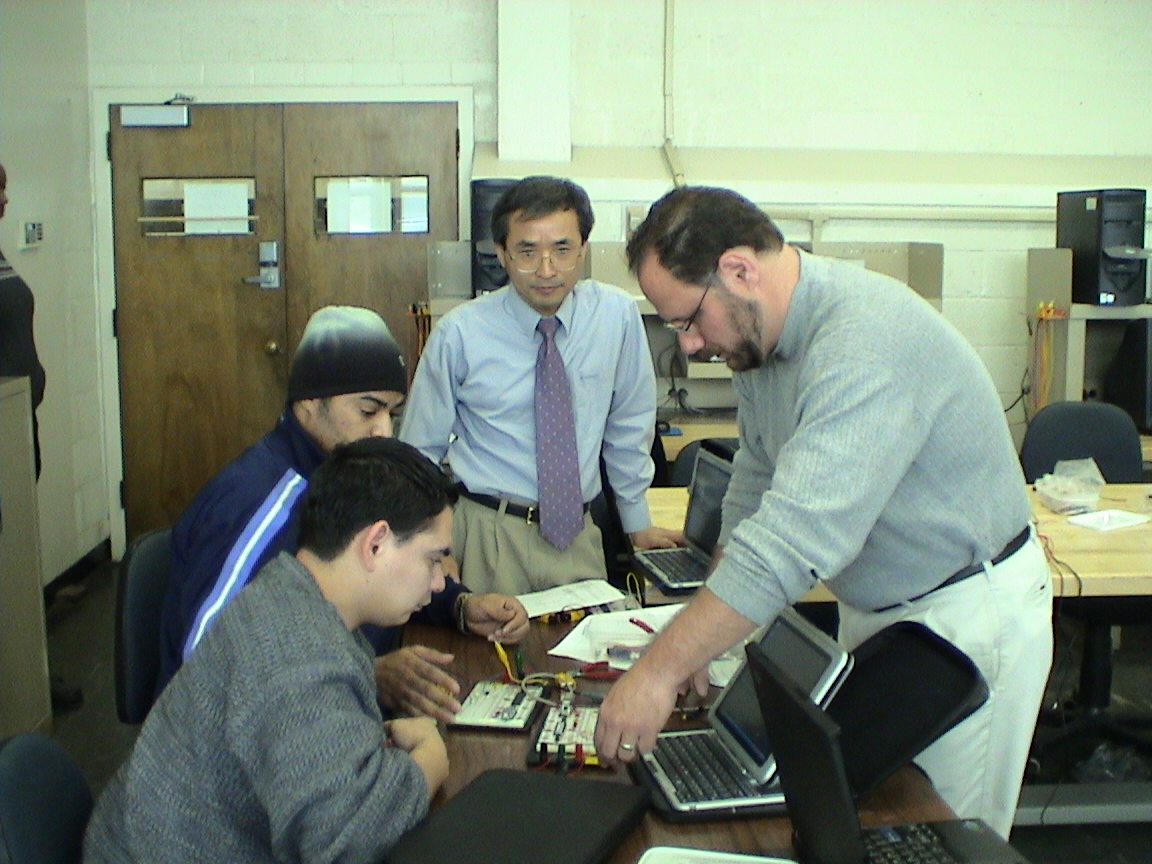
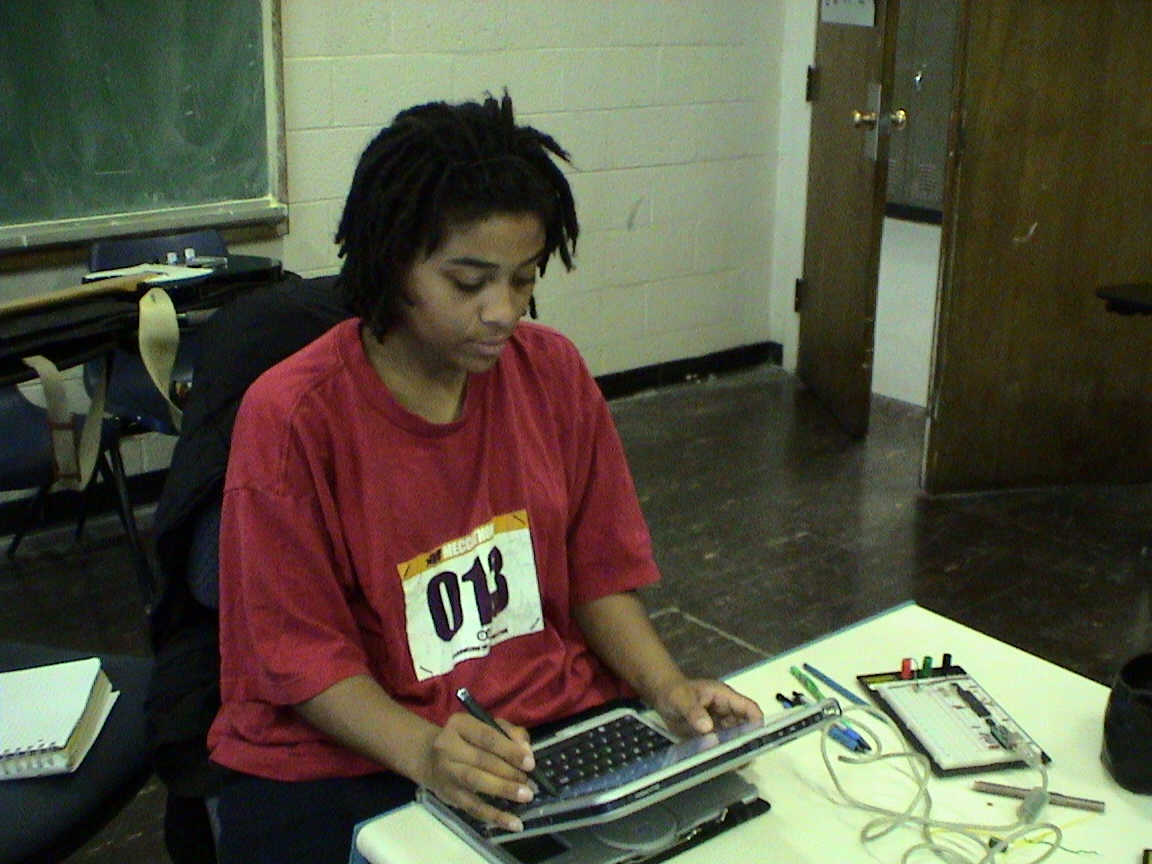
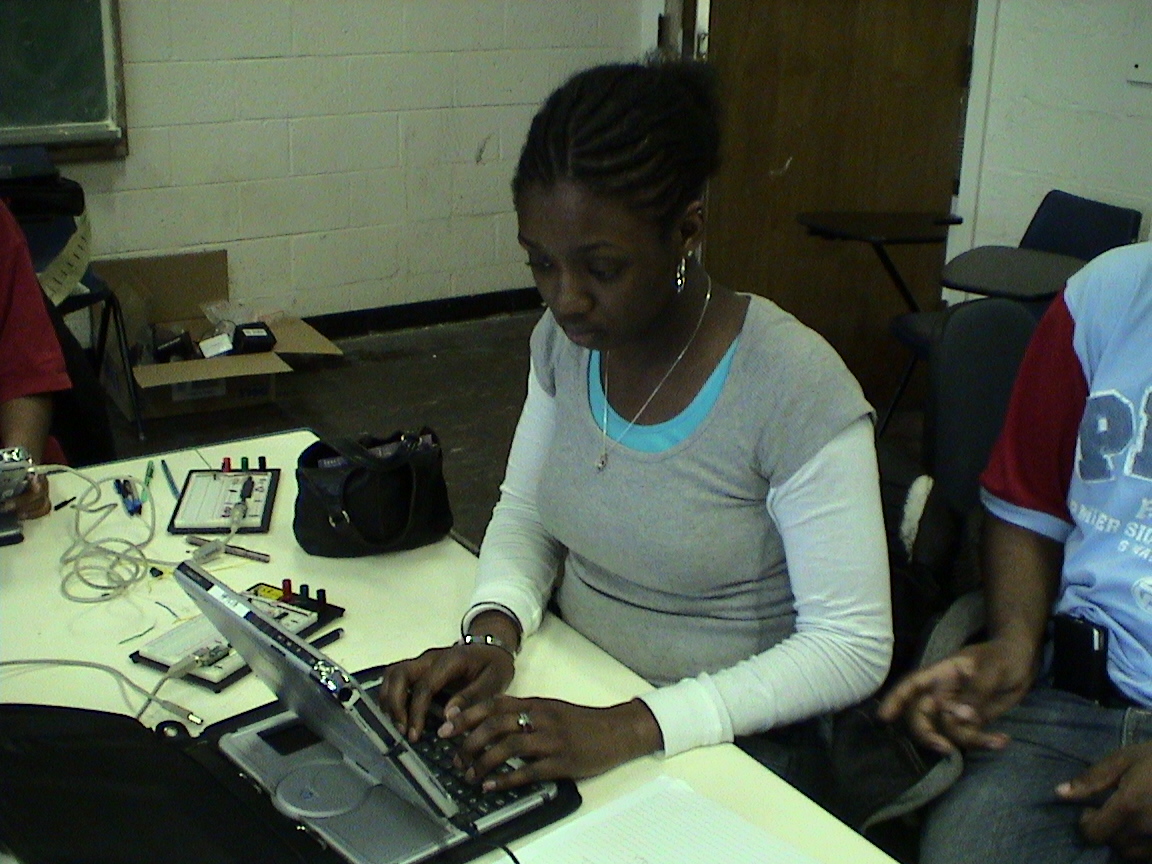
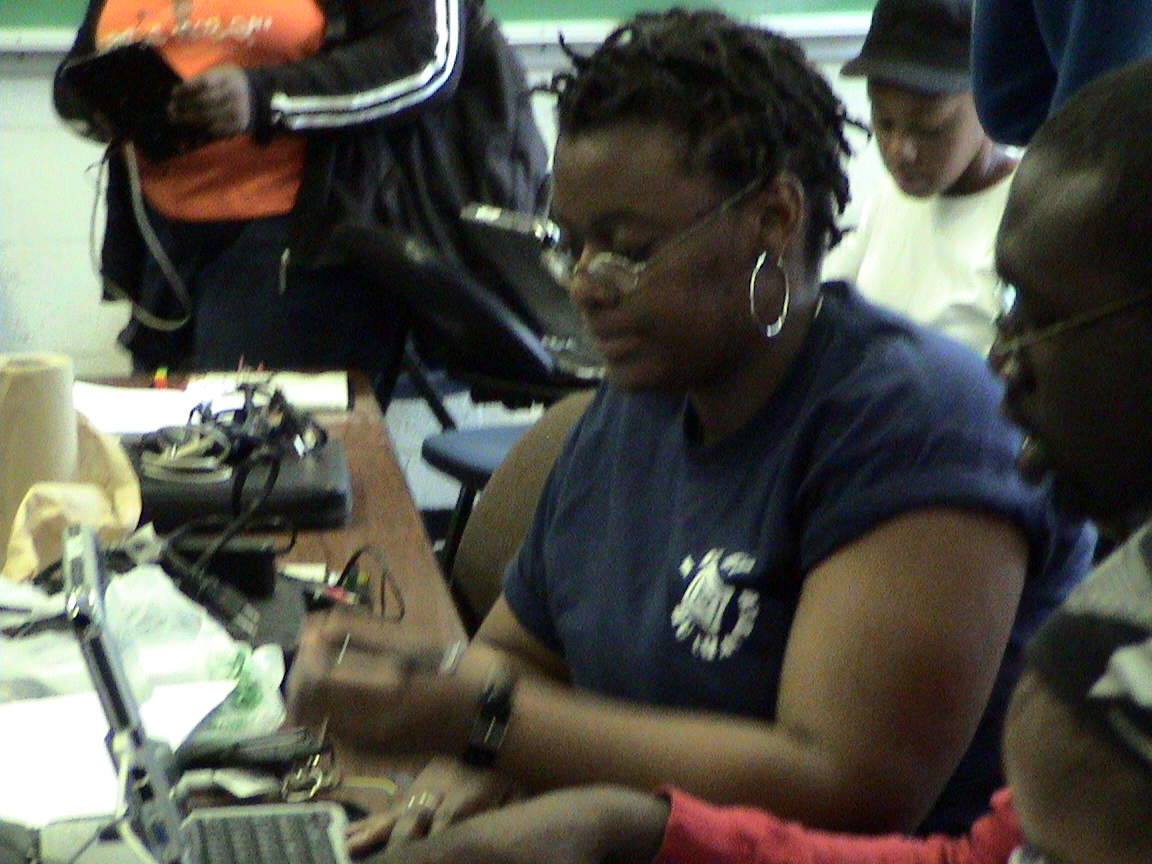
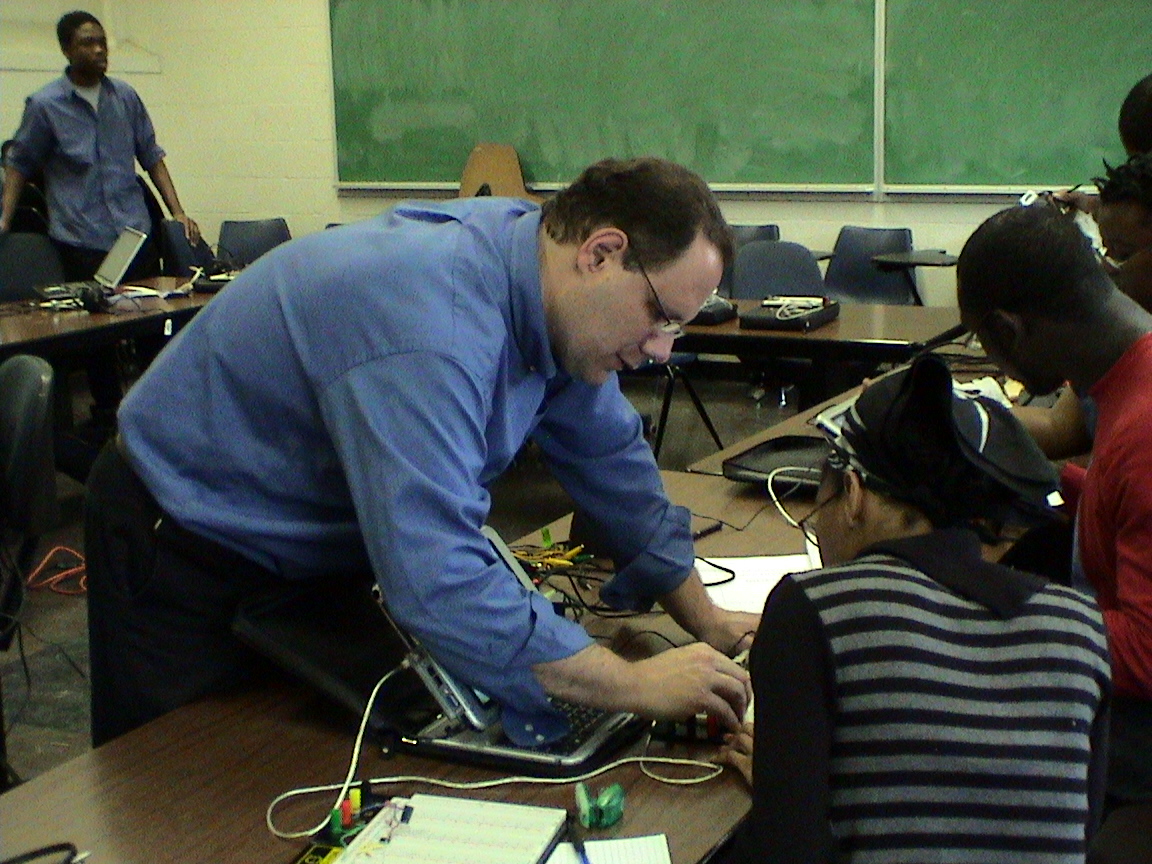
Keisha D'Anaurd and Andrew Pierre check
their circuit with Dr. Don Millard (Left). Crystal Toney and
Lionel Fleshman are busy with tapping the Tablet PC (Right)
More Photos: 5, 6, 7, 8, 9, 10
QUOTES OF THE STUDENTS
- Chimaobi M. - I
appreciated the opportunity of using Table PC‘s for
the first time and implementing a filter circuit and
listening to the output in one arrangement.
- Fanta S. - I feel that I have some
connection between analysis of frequency selective and
real world.
- Colin T. - This kind of learning
environment stimulates interest and encourages deeper
understanding of the circuit and it's applications.
- Daniel E. - Prior to this class and
project, I had no idea how frequency selective circuits
worked. Now, however, whenever I'm operating an appliance
like a CD player or radio and making adjustments to the
treble, bass, etc., I can actually picture what's going
on in the circuit, which gives me a sense of joy as an
aspiring engineer.
- Knia T. - The Mobile Studio was very
interesting and I liked the fact that we were able to see
exactly how real life things come into play regarding
Electrical Engineering.
- Keisha D. - I learned about the basic
application of the theory of inductance and capacitance
and its uses in an everyday system, including an electric
guitar.
- Andrew P. - The fact that we got a
hands-on interaction with the concept being taught was
most appealing to me.
- Dika O. - I would definitely like to
see more of thelecture and lab combinations without heavy
equipment. You could do the lab anywhere.
- Rene H. - I liked the fact that the
class provided the students with an interactive display
of the theory.
- Alex C. - The thing I enjoyed most
about the studio lab was the ability tointegrate all lab
instrumentation into one digital center and the
possibility of performing labs outside of the lab
setting.
MOBILE STUDIO COMMUNITY
- Link to Howard University HP Technology for
Teaching Project Webpage
-
- Link to
most recent Mobile Studio Lab Page (with Tutorials)
- WWW.MWFTR.COM